
When should a roller chain be replaced
A roller chain should be replaced when it reaches a level of wear that affects performance, safety, or proper engagement with the sprockets. The most common indicator is chain elongation, often referred to as chain stretch.
In most industrial applications, it is recommended to replace the chain when elongation reaches approximately 2% to 3% of its original length. Beyond this point, the chain will no longer properly mesh with the sprocket teeth, leading to increased wear, vibration, and potential damage to both the chain and sprockets.
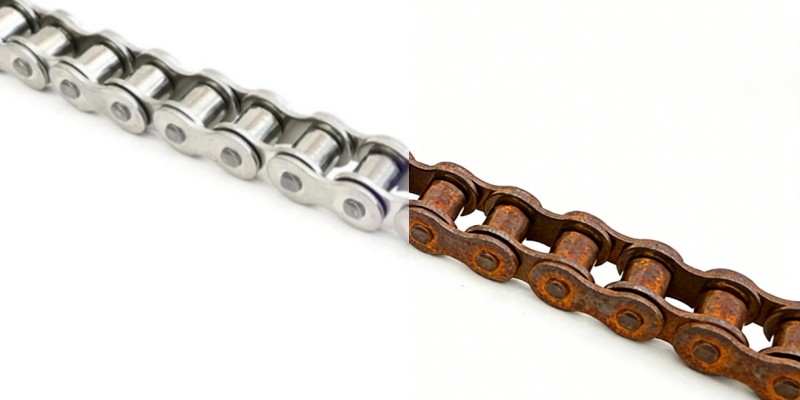
Other signs that indicate a chain should be replaced include stiff or frozen links, excessive noise during operation, visible corrosion, cracked plates, or worn rollers. These conditions can reduce efficiency and increase the risk of unexpected failure.
| Indicator | Description | Action |
| Elongation (2-3%) | Chain pitch has increased due to wear | Replace roller chain |
| Stiff Links | Links do not move freely | Inspect or Replace |
| Excessive Noise | Abnormal sound during operation | Check wear and alignment |
Corrosion | Rust or surface damage | Replace if severe |
Cracks or Damage | Visible structual damage | Replace immediately |
Regular inspection and proper lubrication can help extend chain life, but once significant wear is detected, timely replacement is essential to maintain system reliability and prevent costly downtime.
If you are unsure about the wear condition of your chain, feel free to contact us for technical support or replacement recommendations.
Are you looking for a reliable chain and sprocket manufacturer?
We can quickly provide customers with technical support and customized services.Products
Application
about
