WR vs WH Series Chain: What's the Difference and How to Choose
Two series. Same dimensions. Different heat treatment. If you are selecting a welded steel mill chain for a drag conveyor, bucket elevator or heavy mill application, you have probably seen WR and WH options side by side and asked: what is actually different? The short answer is the scope of the heat treatment. The long answer — and how to use it to make the right choice — is below.
What Are WR and WH Welded Steel Chains?
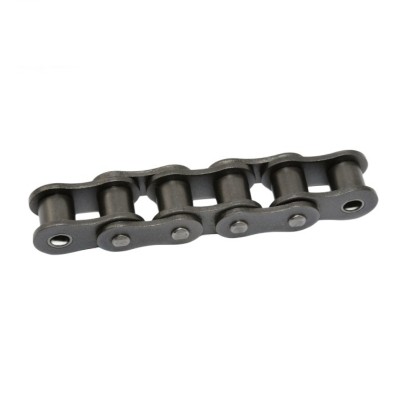
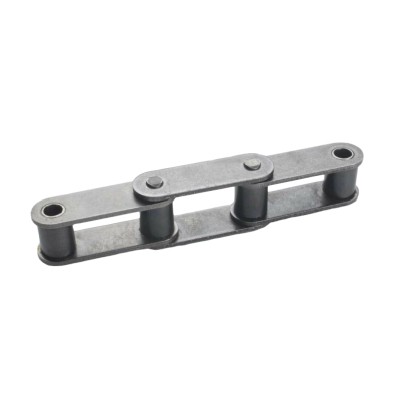
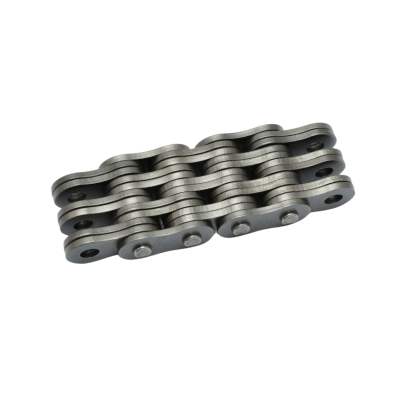
Welded steel mill chains are heavy-duty engineering chains with an offset sidebar design, assembled by riveting rather than cottering. The offset sidebars let the chain flex around relatively small sprockets while carrying heavy, abrasive loads, which is why this construction is the standard for mill, conveyor and elevator service.
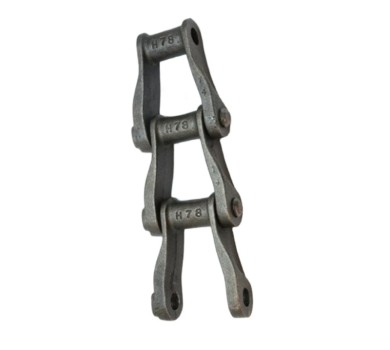
CTS manufactures welded steel mill chains in two standard series with identical dimensions:
WR Series — pins and bushes are heat-treated. A cost-effective choice for moderate to heavy-duty conveying.
WR Series — pins and bushes are heat-treated. A cost-effective choice for moderate to heavy-duty conveying.
WH Series — pins, bushes, and sidebars are all fully heat-treated. Built for continuous heavy-duty operation with maximum wear resistance.
Both series are available in standard sizes — WR82/WH82, WR106/WH106, WR110/WH110 — plus larger custom pitches, in carbon steel, stainless steel and special alloys.
The Core Difference: Heat Treatment
In any welded steel chain, the pins and bushes are the wear surfaces that move against each other, while the sidebars carry the tensile load. Heat treatment determines how long each part survives in service:
• Through-hardened pins and case-hardened bushes — high joint strength and good wear life at the pin/bush interface.
• Through-hardened pins and case-hardened bushes — high joint strength and good wear life at the pin/bush interface.
• Fully heat-treated sidebars — the load-carrying plates are also hardened, so the chain resists wear from abrasive materials and surface contact far longer.
In simple terms: WR heat-treats the moving parts; WH heat-treats everything. That one difference changes the chain’s wear life, service interval, and first cost.
WR vs WH: Side-by-Side Comparison
A practical detail worth knowing: WR82 and WH82 share the same pitch and link dimensions (66.27 mm pitch, 25.40 mm inner width), and the same applies to WR106/WH106 (76.20 mm pitch) and WR110/WH110 (88.90 mm pitch). Because the two series are dimensionally identical, they run on the same sprockets — which means you can upgrade an existing conveyor from WR to WH without modifying the machine. It also means both series are directly interchangeable with major international brands, so replacement does not require redesign.
When to Choose the WR Series
Your conveyor runs moderate duty with manageable downtime for maintenance.
You want the best cost-performance balance — WR offers dependable strength at a lower first cost.
Typical applications: ore and aggregate conveyors, grain and seed handling, sawmill and log-deck service, general bulk material drag conveyors.
When to Choose the WH Series
Conveyors run continuously, often 24/7, under heavy load.
Materials are abrasive — slag, scale, ore, sand, ash — and side-plate wear is a known problem.
Shock loading and dust are normal, and unscheduled downtime is expensive.
Typical applications: steel mill slag and scale handling, mill return systems, high-tonnage ore conveying, cement plant drag conveyors, demanding elevator service.
5-Step Selection Checklist
Step 1 – Define the duty
hours per day, load profile, and whether the operation is continuous or intermittent.
Step 2 – Assess the environment
abrasiveness of the material, temperature, dust, moisture, chemicals.
Step 3 – Choose the pitch
match sprocket and center distance; standard options are WR82/WH82, WR106/WH106, WR110/WH110, or custom.
Step 4 – Select the series
WH when operation is continuous, heavy and abrasive; WR when cost matters more and duty is moderate.
Step 5 – Confirm material and attachments
carbon steel, stainless steel or special alloy; A1, A2, K1, K2, F4 or custom attachments.
Need Help Choosing?
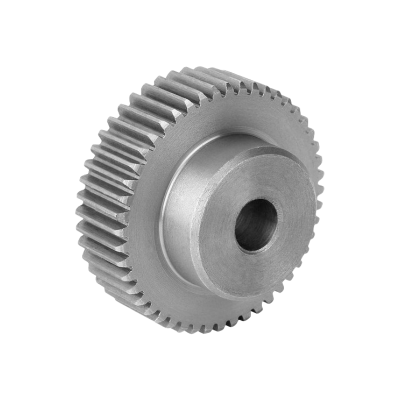
Our engineering approach allows customers to develop sprocket solutions based on drawings, samples, or application requirements. Through engineering design, material selection, and precision manufacturing, CTS helps customers develop custom sprocket solutions for demanding industrial applications.
👉 Contact CTS today for custom sprockets for your application.
FAQs
Can WR and WH chains be used interchangeably?
Dimensionally yes — same pitch and link geometry, same sprockets. But they are not equal in wear life: upgrading from WR to WH is a free performance gain; downgrading from WH to WR in a heavy-duty line is not recommended.
Do you supply attachments?
Yes — standard attachments such as A1, A2, K1, K2 and F4, as well as custom attachments machined to your drawings.