Mounted Bearing Units for Food Processing Equipment
Mounted Bearing Units for Food Processing Equipment
Food processing environments place unique demands on mounted bearing units. Unlike mining, agriculture, or general manufacturing, food production facilities must balance equipment reliability with strict hygiene requirements.
A bearing failure in a conveyor or packaging machine not only creates downtime but also introduces contamination risks, disrupts production schedules, and increases maintenance costs.
For this reason, the corrosion resistance, sealing performance, cleanability, and food safety of bearing units all become critical factors.
Why Food Processing Environments Are Different
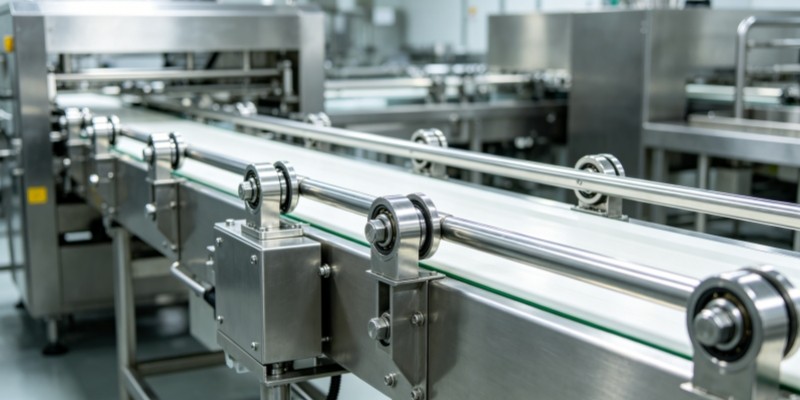
Food plants production equipment is frequently exposed to:
High-pressure washdowns
Water and steam cleaning
Cleaning chemicals and sanitizers
Food particles and residue
Temperature fluctuations
While these conditions help maintain food safety, they can be extremely harsh on conventional bearing units.
Over time, water ingress, corrosion, lubricant washout, and seal damage become common causes of premature failure.
Common Bearing Challenges in Food Processing Equipment
Water Ingress
Frequent washdowns are one of the biggest threats to bearing reliability. Water can gradually penetrate the sealing system and mix with the lubricant inside the bearing.
This often leads to:
Increased friction
Corrosion
Reduced lubrication effectiveness
Shortened bearing life
Even small amounts of water contamination can significantly affect performance over time.
Corrosion
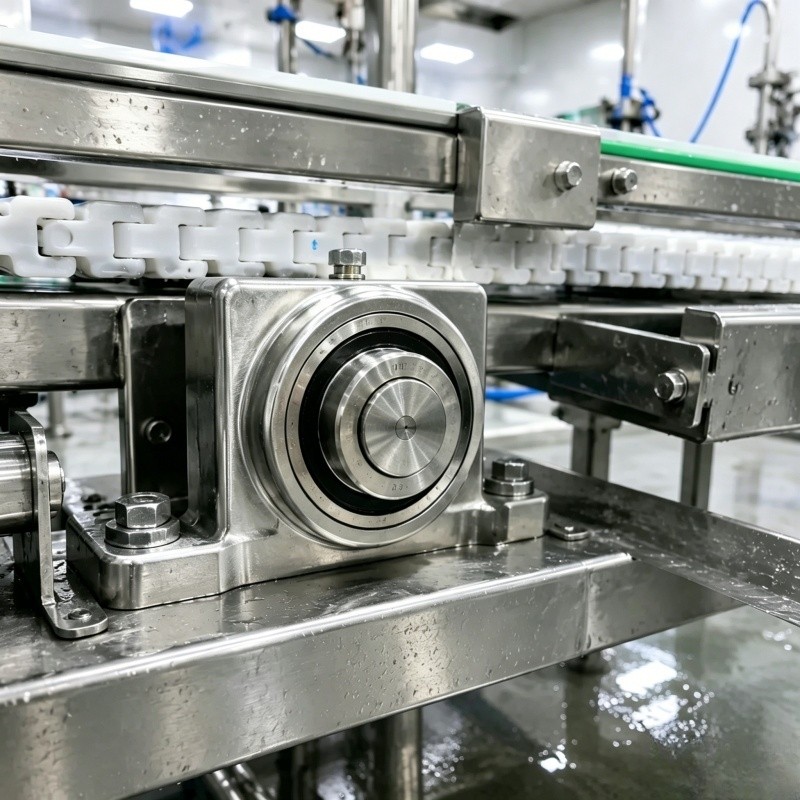
Corrosion is another common issue in food plants. Moisture, cleaning chemicals, and sanitizing agents continuously attack exposed metal surfaces.
Components most vulnerable to corrosion include:
Bearing housings
Locking devices
Grease fittings
End covers
Once corrosion begins, cleaning becomes more difficult, and equipment reliability decreases.
Grease Contamination
Food particles, moisture, and cleaning chemicals can all affect lubricant quality.
Contaminated grease loses its protective properties, increasing wear and operating temperatures.
In severe cases, bearing seizure may occur.
Bacterial Growth Around Equipment
One often-overlooked challenge is hygienic design.
Complex housing shapes, exposed threads, and recessed areas can trap food particles and moisture.
These areas become difficult to clean and may create conditions for bacterial growth.
This is why modern food-grade bearing units focus not only on corrosion resistance but also on easy cleaning and sanitary design.
Why Standard Cast Iron Bearing Units Often Struggle in Food Plants
Cast iron bearing units are widely used in industrial applications because they are strong, durable, and cost-effective.
However, food processing environments present challenges that cast iron was not originally designed to handle.
Common issues include: frequent washdown, which speeds up rust formation on components, corrosive cleaning chemicals leading to surface deterioration of cast iron parts, ongoing moisture exposure triggering corrosion around component seals, as well as strict hygiene requirements creating trouble for thorough cleaning inside damaged sections of the units.
For dry indoor industrial applications, cast iron remains an excellent choice. In food processing facilities, however, corrosion resistance often becomes a higher priority.
The choice of housing material plays a major role in corrosion resistance. Different materials perform very differently in food processing environments.
What Makes a Bearing Unit Suitable for Food Processing
Not every stainless steel bearing unit is automatically suitable for food applications. Several design features work together to improve hygiene and reliability.
Stainless Steel Components
Stainless steel housings provide excellent resistance to corrosion and moisture. They help maintain appearance, simplify cleaning, and extend service life in washdown environments.
Food-Grade Lubrication
Lubrication is particularly important in food processing equipment. Food-grade lubricants are designed to provide bearing protection while meeting food industry safety requirements. Many facilities use NSF H1 food-grade grease for applications where incidental food contact may occur.
Hygienic Housing Design
Modern food-grade bearing units often feature: Smooth surfaces, Rounded profiles, Reduced contamination traps, Easy-to-clean geometry
These design improvements simplify sanitation procedures and reduce contamination risks.
Advanced Sealing Systems
Seals serve as the first line of defense against water and contaminants.
High-performance sealing systems help prevent: Water ingress, Grease loss, Chemical intrusion, Premature bearing failure
In washdown environments, sealing performance is often just as important as housing material.
Stainless Steel vs Thermoplastic Bearing Units
Both stainless steel and thermoplastic bearing units are commonly used in food processing equipment.
Each offers unique advantages.
| Feature | Stainless Steel Units | Thermoplastic Units |
| Corrosion Resistance | Excellent | Excellent |
| Washdown Resistance | Excellent | Excellent |
| Load Capacity | High | Moderate |
Mechanical Strength | High | Moderate |
Weight | Heavier | Lightweight |
Heavy-duty Application | Better Choice | Limited |
For heavy conveyor systems and processing equipment, stainless steel units are often preferred.
For lighter-duty applications with aggressive cleaning procedures, thermoplastic housings may provide additional benefits.
 Quick Inquiry Now
Looking for Bearing Units for Food Processing Equipment?
We supply mounted bearing units designed for demanding food and beverage applications.
Our solutions include:
Stainless steel bearing units
Corrosion-resistant housing
Advanced sealing system
Food processing conveyor solutions
Customized bearing unit configurations
Contact us today to discuss the best solution for your food processing equipment.
FAQ
Are Cast Iron Bearing Units Suitable For Food Processing?
They can be used in dry environments, but stainless steel units are generally preferred where moisture and cleaning chemicals are present.
What is food-grade grease?
Food-grade grease is a lubricant formulated for food industry applications and designed to meet food safety requirements.