How to select, maintain, and extend life of baking chains
Why Tunnel Ovens Need Specialized Chains & Sprockets
Commercial tunnel ovens operate under some of the harshest conditions found in food processing. These systems typically run continuously, face high temperatures, and must meet strict food-grade sanitation requirements. The conveyor chain and sprocket system is the heart of a tunnel oven.
Common Conveyor Systems in Commercial Tunnel Ovens
Tunnel ovens vary depending on the baked product. Each conveyor type demands specific chain characteristics.
| Conveyor Type | Typical Applications | Chain Type Used |
| Wire Mesh Belt Conveyors | Crackers, biscuits, thin baked goods | Wire mesh chain / stainless steel chain |
| Plate / Slat Conveyors | Pans, heavy bread trays, frozen pizzas | Plate chains / roller chains |
| Pan or Peel Board Conveyors | Bread, buns, pastries | Hollow pin chains with attachments |
Combined Zone Conveyors | Multi-stage baking & cooling |
The chain type must match the temperature, load, product weight, cleaning frequency, and food safety level of the production line.
Chain Selection Guide: Chain Used in Tunnel Ovens
Tunnel ovens frequently use specialized chains designed to withstand heat, humidity, grease, sugar vapor, and continuous running.
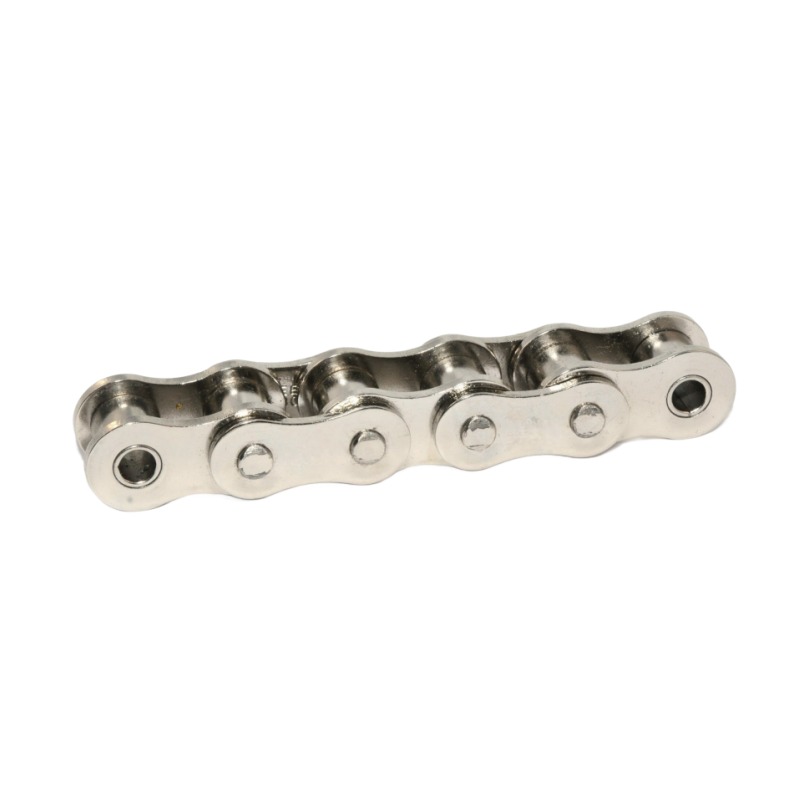
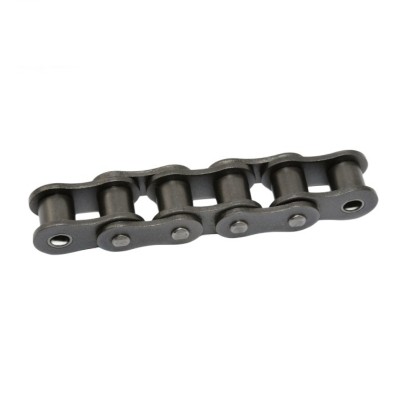
Standard roller chain is best suited for moderate temperatures and lighter loads, making it a common choice for applications like bread and pastry conveyors.
· Available in: carbon steel, stainless steel, heat-resistant alloy
The primary advantages of roller chains are their low cost, reliability, and wide availability. However, it also has limitations, as it requires regular lubrication and is not ideal for high-temperature zones.
Hollow Pin Chain
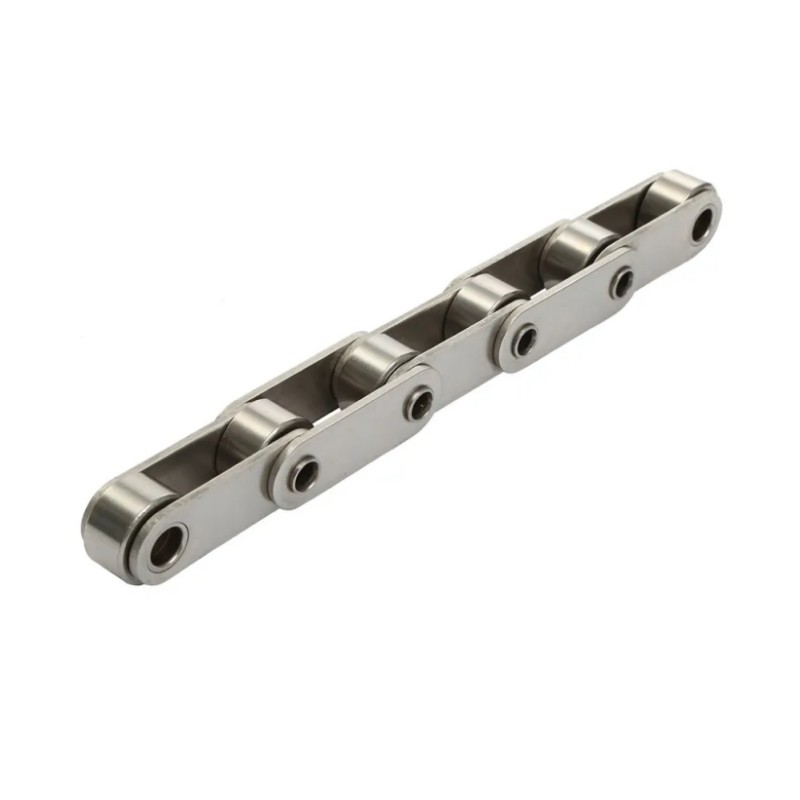
Hollow pin chain is widely employed in baking pan conveyors due to their design that readily accommodates various attachments.
It offers significant advantages, including ease of cleaning, exceptional flexibility for attaching components, and the availability of food-grade versions. These properties make it particularly suitable for applications involving bread trays, peel boards, and transfer systems.
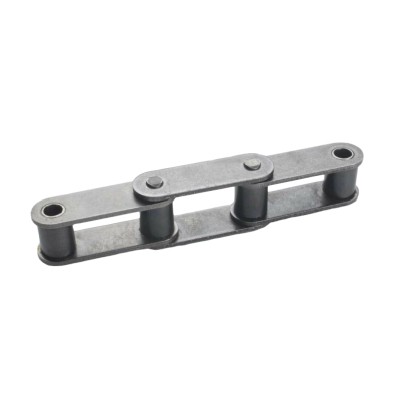
Plate Conveyor Chain
Designed for heavy-duty tasks and high temperatures.
Features:
·Strong load capacity
·Resistant to temperature deformation
·Long service life
Used commonly for pizza ovens, brick ovens, and heavy bakery pans.
Stainless Steel Conveyor Chain
Ideal for food-contact zones, high-temperature zones, and wash-down areas.
| Material | Max Temperature | Corrosion Resistance | Best Use Case |
| 304SS | 260℃ | Good | General baking conveyors |
| 316SS | 300℃ | Very Good | Wet zones & steam areas |
| 310SS / 314SS | 1000℃ | Excellent | High-heat baking zones |
600 Series Heat-treated SS | 1200℃ | Excellent | Extrem-temperature ovens |
Wire Mesh Oven Chain
Used in lightweight baked goods: crackers, cookies, biscuits, and flatbread.
The design offers significant advantages, including good airflow for more uniform baking, lightweight construction that enhances energy efficiency, and easy cleaning.
Sprocket Selection for Tunnel Ovens
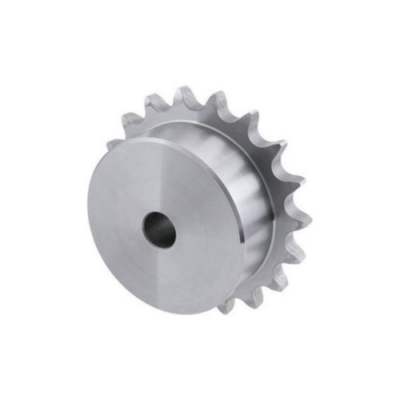
· Single-row sprockets
· Multi-row sprockets (for heavy or wide conveyors)
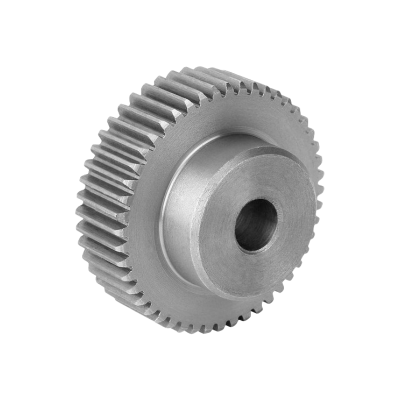
· Stainless steel sprockets for high-temperature areas
· Split sprockets (for easy maintenance)
Ideal Sprocket Materials for Tunnel Ovens
| Sprocket Material | Temperature Resistance | Benefits |
| Stainless Steel 304/316 | High | Corrosion-resistant, food-safe |
| Carbon Steel + Hardening | Medium | Cost-effective, durable |
| Heat-resistant Alloy | Very High | Best for extrem-temperature zones |
Environmental Conditions Inside Tunnel Ovens
Tunnel ovens are divided into different baking zones, each with different requirements.
High-temperature Zones (180℃-350℃)
Require heat-resistant stainless steel chains, and thermal expansion must be considered
Moisture / Steam Zones
Risk of corrosion increase, and require 316/316L stainless steel.
Food-Contact Zones
Must use H1 food-grade lubricants, and chains must minimize debris and contamination.
Cooling Zones
Condensation can cause rust, seld-lubricating chains are beneficial.
Chain Inspection & Replacement
When the chain pitch elongation is more than 2%, it's time to replace a new chain.
| Wear Condition | Visible Sign | Action |
| < 1% Stretch | Smooth running | Monitor |
| 1-2% Stretch | Minor noise | Plan replacement |
| > 2% Stretch | Chain jumping | Replace immediately |
Recommended Replacement Cycles:
· Heavy bread trays: every 12-18 months
· High-temperature conveyors: 6-12 months
· Wire mesh belts: 12-24 months
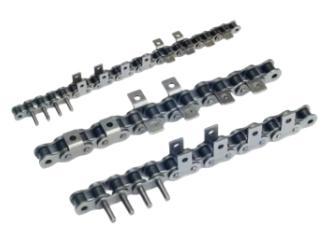
CTS—Bakery Chain and Sprocket Manufacturer
We can supply standard chains and also support custom service. And, we provide the chain sprockets to match with chains in bakery application.
If you need more detail information, please contact us.