How To Size Roller Chains
Why Correct Roller Chain Sizing Matters
Choosing the correct roller chain size directly affects the efficiency, reliability, and service life of your entire drive system. A properly sized chain distributes load evenly, meshes accurately with the sprocket, and operates smoothly under the intended working conditions.
In contrast, using the wrong chain size can lead to several common problems:
Premature chain elongation
Excessive sprocket wear
Increased vibration and operating noise
Reduced transmission efficiency
Unexpected downtime and higher maintenance costs
Taking the time to size a roller chain correctly at the beginning can significantly reduce maintenance costs and improve equipment reliability over the long term.
Expert Tip:
Never choose a roller chain based only on its pitch. Two chains may have the same pitch but different roller diameters or inner widths, making them incompatible with the same sprocket.
Understand Roller Chain Size Designations
Before measuring or selecting a roller chain, it's essential to understand how roller chain sizes are designated. Around the world, two standards dominate the market: ANSI and ISO (DIN). While they look similar, their dimensions are not always interchangeable.
ANSI Roller Chain
ANSI roller chains are widely used in North America and follow the ANSI B29.1 standard. Common sizes include:
| ANSI Chain Size | Roller Chain Pitch |
| 1/2" | |
| 5/8" | |
| 3/4" | |
1" | |
1-1/4" |
Metric Roller Chain (ISO 606/DIN 8187)
Metric roller chains comply with ISO 606 and DIN 8187 standards and are commonly used in Europe, Asia, and many international markets.
Although ANSI #40 and ISO 08B have similar chain pitches, their overall dimensions differ. Using the wrong chain with a mismatched sprocket can lead to rapid wear and poor transmission performance. For this reason, always confirm the chain standard before purchasing a replacement.
For more details: Are 40 Roller Chain and 08B Roller Chain interchangeable?
Measure an Existing Roller Chain
If you're replacing an existing roller chain but don't know its model number, the most reliable method is to measure the chain directly. Accurate measurements allow you to identify the correct chain size, verify compatibility with your sprockets, and avoid costly installation errors.
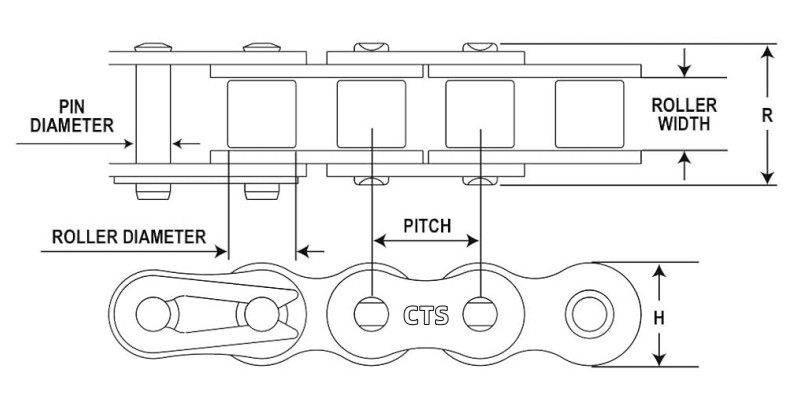
While many people only measure the chain pitch, professional engineers evaluate five key dimensions before confirming a roller chain size:
• Chain Pitch
• Roller Diameter
• Inner Width
• Pin Diameter
• Overall Width
For the most accurate results, always clean the chain before measuring and use a digital caliper instead of a ruler whenever possible.
Measure the Chain Pitch
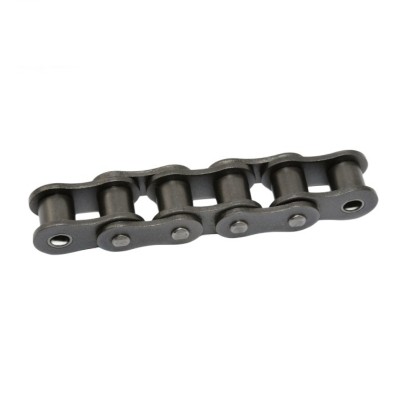
The chain pitch is the most important dimension when identifying a roller chain. It is defined as the distance between the centers of two adjacent chain pins.
Since sprockets are manufactured according to chain pitch, an incorrect pitch measurement will immediately result in an incompatible chain.
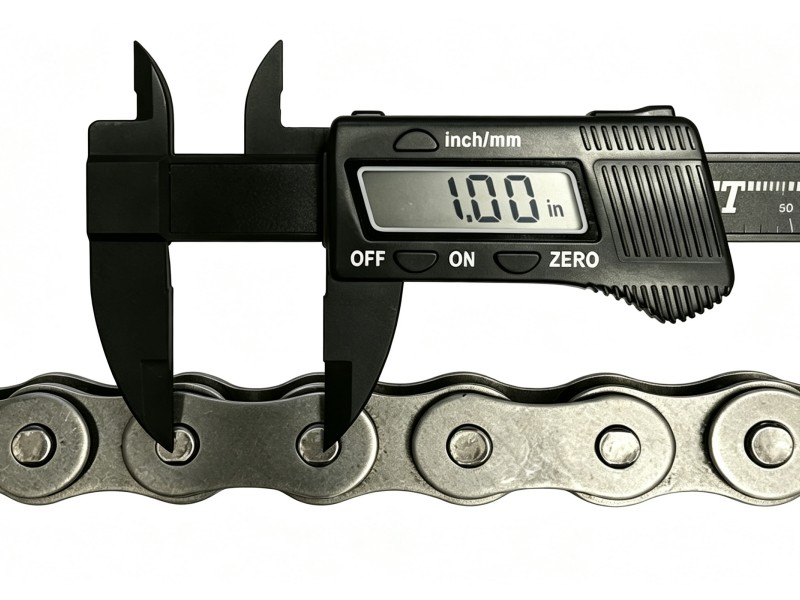
How to Measure
1) Place the chain on a flat surface.
2) Locate two neighboring chain pins.
3) Measure from the center of one pin to the center of the next pin.
4) Record the measurement in millimeters or inches.
For heavily worn chains, measure the distance across 5 to 10 pitches and divide by the number of pitches to reduce measurement error.
Measure the Roller Diameter
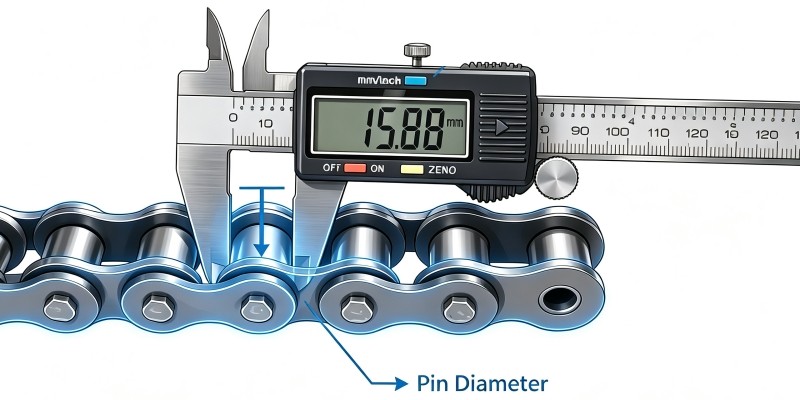
The roller contacts the sprocket teeth during operation. If the diameter differs from the sprocket specification, poor engagement, excessive wear, and abnormal noise may occur.
Use a digital caliper to measure the outside diameter of a single roller without applying excessive pressure.
Measure several rollers and use the average value if the chain shows visible wear.
Measure the Inner Width
The inner width is the distance between the two inner link plates. This dimension determines whether the sprocket teeth can fit correctly between the inner plates. A chain with the wrong inner width may not seat properly on the sprocket, even if the pitch is correct.
How to Measure
Open the jaws of the digital caliper and measure the clear distance between the two inner plates.
Do not measure the outside width of the chain.
Measure the Pin Diameter
The pin diameter directly affects the chain's tensile strength and wear resistance. Although it is not usually the first dimension checked, measuring the pin diameter is essential when identifying an unknown chain or comparing similar chain series.
How to Measure
Measure the exposed portion of the pin using a digital caliper.
If the chain has been heavily worn, take measurements from several pins and compare the average value with the manufacturer's specifications.
Measure the Overall Width
The overall width is the total width across the chain.
Although it is not the primary sizing dimension, it is useful when confirming compatibility with chain guides, side plates, guards, or limited installation spaces.
How to Measure
Measure from the outside of one side plate to the outside of the opposite side plate.
This measurement is particularly important for conveyor systems and equipment with narrow guide rails.
Roller Chain Measurement Checklist
Before identifying the chain size, make sure you have recorded the following dimensions:
| Measurement Item | Required | Purpose |
| Chain Pitch | ✔ | Determines sprocket compatibility |
| Chain Roller Diameter | ✔ | Ensures correct tooth engagement |
| Inner Width | ✔ | Matches sprocket tooth thickness |
Pin Diameter | ✔ | Verifies chain strength and specification |
Overall Width | Optional | Confirm installation clearance |
If all five dimensions match the manufacturer's specification, you can confidently identify the correct roller chain size and proceed with replacement or system design.
Need Help Identifying Your Roller Chain?
Still unsure about your roller chain size?
Our engineering team can help you identify your chain based on a few simple measurements or photos. Whether you need a replacement chain or a custom solution, we're here to provide fast and professional support.
👉 Contact CTS today for expert roller chain sizing assistance and product recommendations.