Different Types of Split Taper Bushings and Their Applications
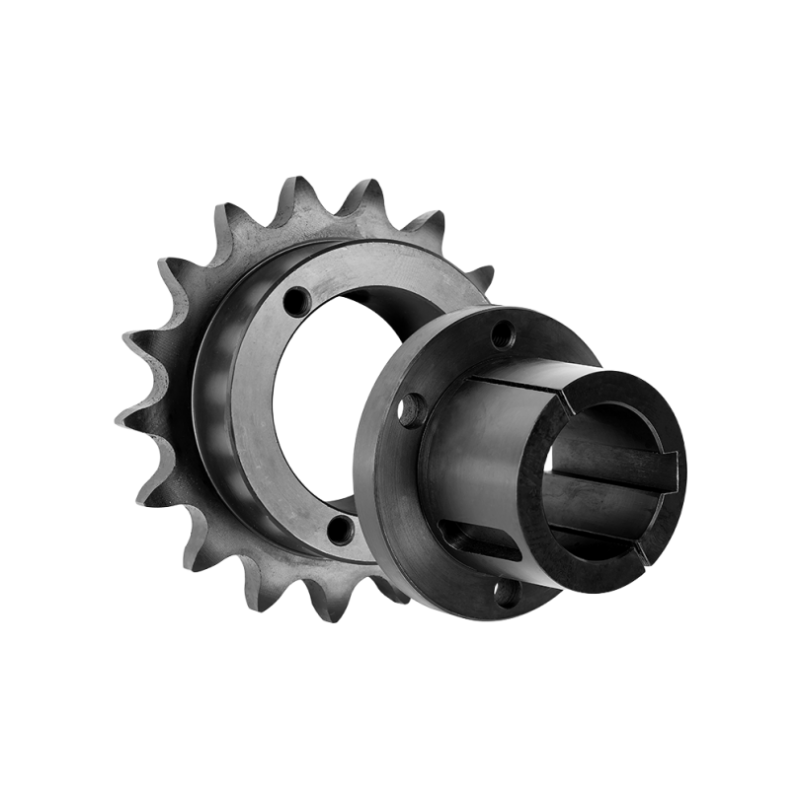
Unlike simple sleeve taper lock bushings, split taper bushings are organized by series, and each series represents a specific geometry, bolt configuration, and torque capacity range. Choosing the correct type is essential for proper shaft grip, hub compatibility, and long-term performance.
How Split Taper Bushings Are Classified
Split taper bushings are primarily classified by series designation, not by bore size.
The split taper bushing series determines the outside diameter, length through bore, bolt circle, and bolt quantity, torque transmission capacity, and compatible hub design. This means two bushings with the same bore diameter may not be interchangeable if they belong to different series.
Many selection errors happen because buyers focus only on shaft size and ignore series compatibility.
For dimensional details and size charts, you can refer to: Split Taper Bushing Dimensions and Size Chart
Major Split Taper Bushing Series
Split taper bushings are commonly grouped into letter-based series such as H, S, P1, P2, and Q. Each has its own structural purpose.
H series Split Taper Bushing
The H series split taper bushing is typically used in lighter to medium-duty applications. It features a relatively compact outside diameter and moderate clamping force. Commonly used in Light conveyors, Small fans, and Agricultural Equipment.
It is suitable where torque demand is controlled, and shaft diameters are smaller.
S series Split Taper Bushing
The S series( S1 bushing and S2 bushing ) generally offers greater torque capacity than the H series.
It usually features a larger flange and a stronger bolt configuration. Typically used for applications: Industrial blowers, Pumps, and General power transmission systems.
It provides a balance between compact design and reliable clamping force.
P1 and P2 series Split Taper Bushing
These series are often used in heavier-duty environments. They typically have Larger outer dimensions, Longer taper engagement, and Higher clamping pressure. P1 and P2 series split taper bushings are usually used in Crushers, Heavy conveyors, and Mining equipment.
Because of the stronger locking force, installation torque control becomes more critical.
Q series Split Taper Bushing
The Q series split bushing is designed for higher shaft diameters and demanding load conditions. It is commonly used in heavy industrial power transmission setups where stability under shock load is required.
For complete dimensions and detailed specifications, please visit our Split Taper Bushing Dimensions and Size Chart
Bolt Quantity and Locking Mechanism Differences
One of the defining differences between split taper bushing types is bolt configuration.
Some series use two bolts, while others use three or more. The number and arrangement of bolts affect:
1) Clamping force distribution
2) Installation torque requirements
3) Ease of removal
4) Load balance under dynamic operation
The locking principle remains the same — tightening bolts draws the bushing into the tapered hub, converting axial force into radial pressure — but structural capacity varies by series.
Are Different Series Interchangeable?
Only the split taper bushings within the same series and dimensional standard are interchangeable.
Split taper bushing interchanges require the same series, outside diameter, bolt pattern, taper geometry, and bore tolerance. A matching bore size alone does not guarantee compatibility.
For branded replacements, the key factor is dimensional precision — not logo identity.
If you're not sure which split bushing you need, and want to know more details.
Contact our technical team today!
How to Select Split Taper Bushing
When selecting a split taper bushing type, the decision-making process commonly proceeds as follows:
1) First, confirm the shaft diameter and keyway specification.
2) Second, identify the hub series requirement.
3) Third, verify the torque demand and the load condition.
4) Finally, confirm bolt configuration and dimensional tolerances.