Cornhead Idler Sprocket Failure: 6 Signs & Replacement
Why the Lower Idler Sprocket Unit Fails First
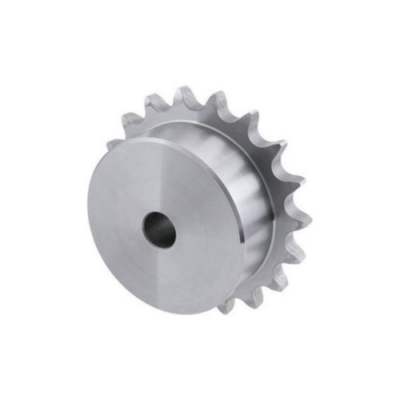
A gathering chain loop on a corn head runs on three points: the upper drive sprocket, the upper idler or tensioner, and the lower idler sprocket unit. The lower unit, mounted at the bottom of the row unit right at the stalk entry point, does two jobs:
• It turns the chain path back at the bottom of the row unit.
• It holds chain tension, so the chain cannot jump a tooth when the row unit slugs.
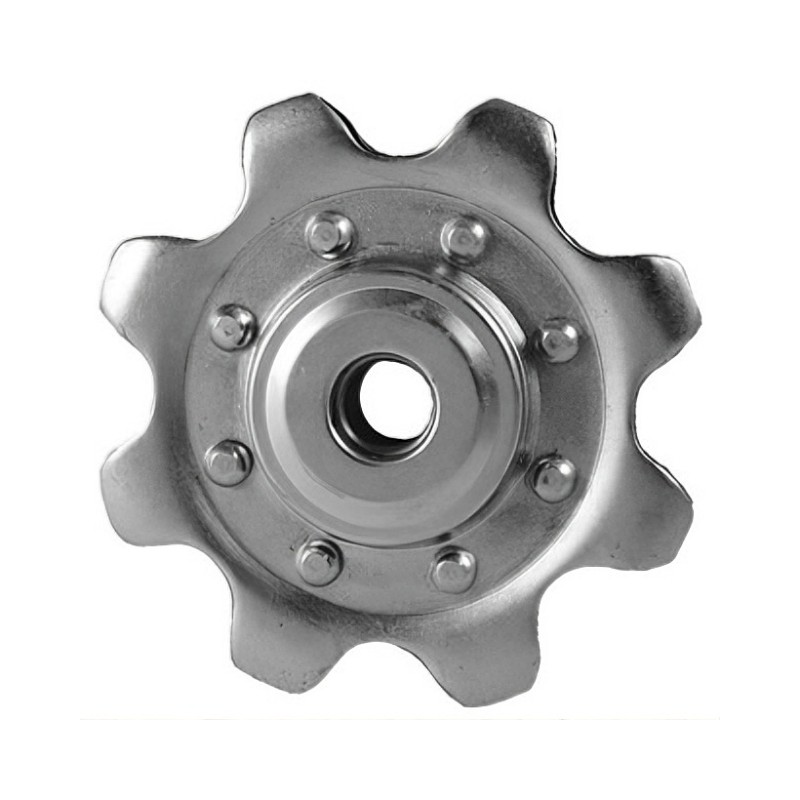
Because it is mounted low and completely exposed, it works in the worst conditions on the whole machine. Crop dust is fine, dry, and abrasive. It works its way past simple seals, mixes with the bearing grease, grinds the bearing races, and eventually locks the bearing solid.
6 Warning Signs Your Idler Sprocket Is Failing
Work through these in order. Signs 1 to 5 are your early warning; sign 6 means the damage is already done.
Sign 1: Gritty or Rough Rotation
→ What you'll see: With the chain tension released, the idler does not spin freely. It feels sandy, notchy, or heavy.
→ What it means: Contamination has already reached the bearing. The grease is no longer doing its job.
→ What to do: replace the unit. A contaminated bearing does not recover, and grease will not wash the grit out.
Sign 2: Side-to-Side Wobble
→ What you'll see: grip the sprocket and rock it on its axis. There is visible play.
→ What it means: the bearing clearance is gone, and the races are worn.
→ What to do: replace the unit and check the mounting shaft for scoring while the unit is off.
Sign 3: Hooked or Pointed Teeth
→ What you'll see: run a finger along the tooth faces. The driving side is rounded or hooked like a wave. Teeth may be worn to a point.
→ What it means: the chain is no longer seating correctly. It is riding up the tooth face instead of sitting in the root.
→ What to do: replace the unit. Once the profile is gone, the chain will start skipping under load.
Sign 4: Chain Jumping or Running Off Line
→ What you'll see: the gathering chain skips a tooth, rides to one side of the sprocket, or the two chains in a row wear at visibly different rates.
→ What it means: usually the idler or the drive sprocket, not the chain. Check both before you order a new chain.
→ What to do: check the idler for signs 1 to 3, check the guide rails for grooving, then check chain tension and alignment.
Sign 5: Grease or Grit Packed Around the Seal
→ What you'll see: a ring of dark, oily grit around the bearing housing, or grease pushed out past the seal.
→ What it means: the seal has failed in both directions — grease out, dirt in. This is the failure in progress, often weeks before it seizes.
→ What to do: replace the unit. This is the cheapest moment to catch it.
Sign 6: A Snapped Gathering Chain
→ What you'll see: the chain is broken, often mid-season, sometimes with a bent guide or a damaged drive sprocket.
→ What it means: this is the result, not the cause. The idler bearing almost certainly seized first.
→ What to do: replace the idler and the chain, and check the drive sprocket. If you only fit a new chain, it will break again.
Why These Idlers Fail: 5 Root Causes
| Root Cause | What it looks like on machine | How to prevent it |
| Dust and grit ingress | Dry, sandy bearing; grease turning gray and gritty | Use a multi-seal bearing idler; keep the area clean |
| Bearing seizure | Sprocket will not turn; chain scrubbed flat on one side | Catch it at signs 1-2 |
| Tension set wrong | Too tight: bearing runs hot. Too loose: chain whips and hammers the teeth | Set a small amount of slack on the return side, then re-check after running |
Misalignment | One side of the sprocket and chain worn much faster than the other | Align both chains in a pair so they share the load evenly |
Running past the wear limit | Everything looks tired; the unit has done several seasons | Treat idlers as a consumable and replace on schedule, not on failure |
The 3-Minute Pre-Season Check
✔ 1. Spin test. Release chain tension. Spin the idler by hand. Smooth and quiet = good. Gritty, notchy, or noisy = replace.
✔ 2. Wobble test. Rock the sprocket side to side. Any perceptible play = the bearing is done.
✔ 3. Tooth check. Run a finger along the tooth faces. A sharp hook on the driving side, or teeth worn to a point = replace.
✔ 4. Seal check. Look for dark, oily grit or pushed-out grease around the bearing housing.
✔ 5. Chain stretch. Measure across several pitches and compare against the new dimension. Past the limit = the chain is due as well.
✔ 6. Left vs. right. Both idlers on a row pair should feel the same. If one feels different, it is telling you something.
✔ 7. Guide rails. Check the channel for grooving where the chain has been running. Deep grooves will shorten the life of the new chain.
✔ 8. Record it. Note which units were replaced and when. Next season starts from a known baseline.
How to Identify the Right Replacement Unit
| What to measure | Why it matters | How to measure it |
| Tooth count | Must match the chain pitch and the drive ratio | Count the teeth on the old sprocket |
| Chain pitch | Chains of the same pitch family are not interchangeable across widths | Measure center-to-center of two pins |
| Bore diameter | Determines what fits the mounting shafts or hub | Measure the bearing bore with calipers |
Hub width/offset | Wrong offset pushes the chain out of line with the guide | Measure hub depth and note which side the offset faces |
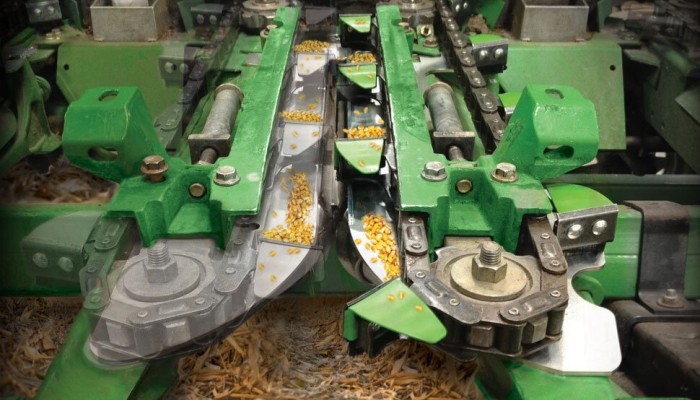
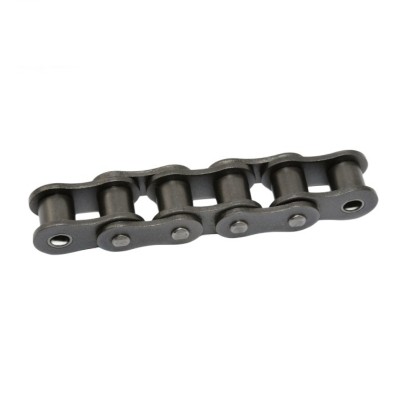
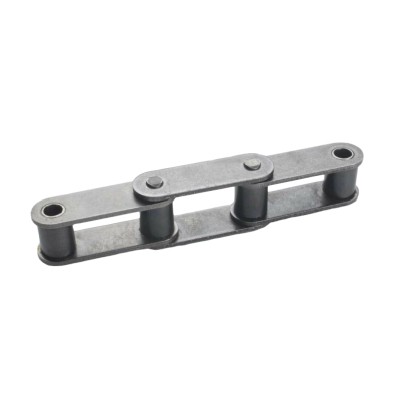
Also note the chain model on your machine. On many corn heads, the lower idler is matched to a narrow CA-type steel agricultural chain — for example, a CA555 (41.4 mm pitch, 12.7 mm inner width) — while CA550, CA557, or CA620 are used elsewhere in the header. Getting the chain model right is usually the quickest way to confirm the correct idler.
Send us your machine make and model, the OEM part number if you have it, and a photo of the old unit with a ruler alongside it. We will cross-reference it and come back with a firm quote, typically within 24 hours.
We supply the complete gathering chain system for corn heads:
• Lower idler sprocket units — complete assemblies with sealed bearings
• Gathering chain sprockets — upper and lower, standard and custom
• Custom attachments — built to your drawing or sample
Frequently Asked Questions
How do I know if my corn head idler sprocket is bad?
Release the chain tension and spin it by hand. A gritty, rough or notchy feel, or any side-to-side wobble, means the bearing is failing and the unit should be replaced. Also check for hooked teeth and grit packed around the bearing seal.
Does the idler come with the bearing installed?
Yes. It is supplied as a complete unit with the sealed bearing already pressed into the sprocket body, so it bolts straight on.