Browning Split Taper Bushing: Features, Sizes, and Replacement
About Browning Split Taper Bushing
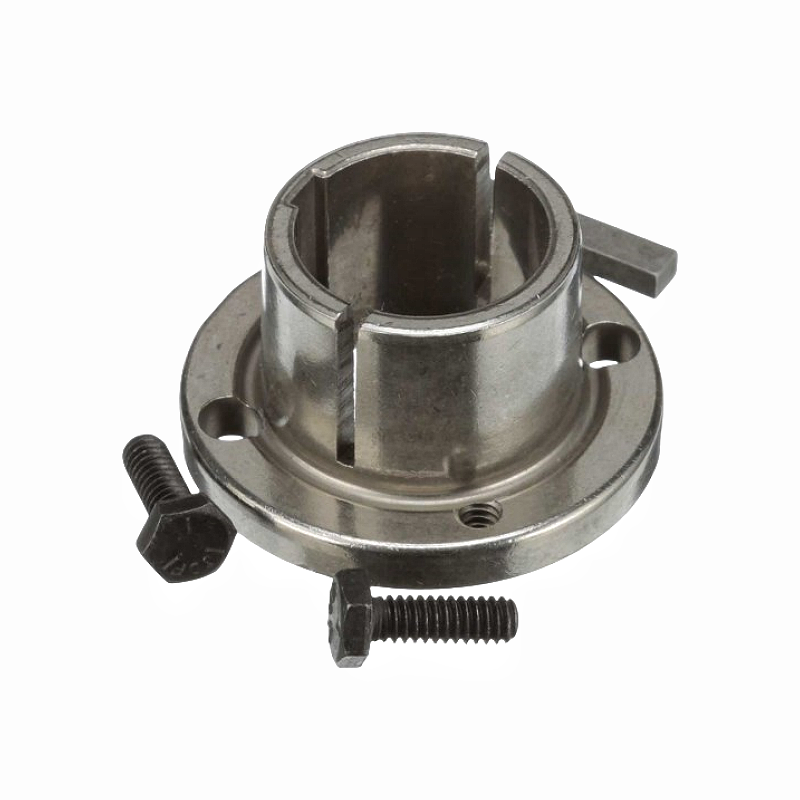
In power transmission markets, the Browning name appears almost everywhere — OEM drawings, maintenance records, and distributor inventories. Decades of supply history built strong familiarity, and for many technicians, the brand became a default reference.
Because of that, when replacement time comes, buyers often search for the brand name first rather than the structural type.
In most cases, the requirement is reliable fit and torque transmission, not necessarily the brand of split taper bushings.
How the Bushing Size System Works
When looking at a Browning part number, experienced buyers can quickly estimate the envelope and bore capability. The series defines the outside geometry and bolt pattern, while the bore relates to the shaft. Although catalog formats differ among suppliers, the dimensional philosophy is widely recognized in the industry. That is why equipment designed years ago can still be maintained today without redesigning hubs.
| Split Taper Bushing Size | Application | ||
| H series Split Taper Bushing | Compact design for light to medium-duty applications | ||
S series Split Taper Bushing | Increased torque capacity and wider bore range | ||
| P1/P2 series Split Taper Bushing | Heavy-duty bushings for larger shafts and higher loads | ||
| Q series Split Taper Bushing | Extra heavy-duty applications requiring maximum torque transmission | ||
For complete dimensions and detailed specifications, please visit our split taper bushing full-size page. You'll find that our split taper bushing dimensions are the same as Browning's, which isn't surprising, because Browning has become an industry standard, and we manufacture our split taper bushings according to this size. Therefore, you can use our split taper bushing as replacements.
Split Taper Bushing Application
Rather than being special-purpose items, these bushings are everyday workhorses. You will commonly find them mounted inside:
belt sheaves in ventilation systems
conveyor pulleys in logistics lines
pump drives
mixers and processing machines
agricultural equipment
In many installations, they remain unnoticed for years, which is usually a sign that they are doing their job well.
Interchangeability: Can Browning Split Taper Bushings Be Replaced?
Are Browning Split Taper Bushings Interchangeable?
In most standard applications, Browning split taper bushings are interchangeable with equivalent split taper bushings from other manufacturers, provided that:
The size series designation matches (H, S, P1, etc.)
Bore diameter and keyway specifications are identical
The application torque requirement does not exceed design limits
This interchangeability is possible because Browning size series follow established dimensional standards rather than proprietary designs.
Buyers should verify specifications carefully when:
Using custom-machined bores
Operating under extreme shock or reversing loads
Replacing bushings in critical OEM equipment
Engineering confirmation is recommended in these cases.
How Professionals Judge a Replacement Option
Instead of focusing on the logo, experienced engineers look deeper. They want to know:
Will the bushing seat correctly in the hub?
Are tolerances tight enough to maintain concentricity?
Is the material suitable for the transmitted torque?
Can the supplier reproduce the same quality next year?
When those answers are convincing, resistance to alternatives becomes much lower.
About CTS
As a professional split taper bushing manufacturer, we have extensive experience. If you need any help, please contact our engineering team for assistance with bushing selection and application compatibility. We work closely with distributors, equipment manufacturers, and maintenance teams worldwide to provide reliable, cost-effective solutions.
FAQs
Can aftermarket split taper bushings replace Browning bushings?
Yes, in most standard-size series, provided dimensions and torque requirements match.
What is the most important factor when replacing a taper lock bushing?
Dimensional accuracy and material quality are critical.